Showing posts with label 2017. Show all posts

Wednesday, December 19, 2018

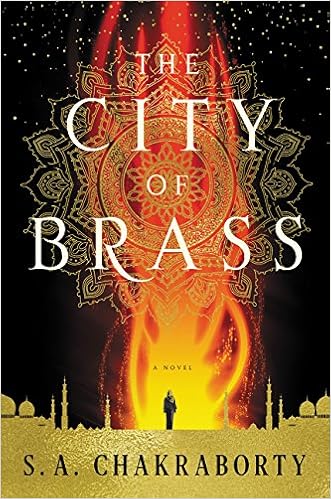
City of Brass by S. A. Chakraborty

Nahri is a young, street smart con artist living in Cairo. The Ottoman and French Empires are contesting the land, meaning that there are all sorts of marks for her fortune telling business. 

But Nahri has other skills, too. She has a knack for healing the sick. If she hears any language, she can understand and speak it. Her own native tongue, Divasti, is completely different from anything else others speak. 

While participating in a Zar exorcism ceremony, Nahri decides to use Divasti to add some exotic flair. Little does she know that it will get the attention of a daeva and a ifrit. Plunged into a world that she previously thought was myth, Nahri has to navigate her place in the new world. 

Overall, this was a fun book to read. I've had it near the top of my queue since April, but felt the time was right just a few weeks ago. I took it with me to a major convention, PAX Unplugged. I found the story engaging enough that I was stealing time before gaming sessions to enjoy it! It certainly made standing in the registration lines a lot more bearable. 

Nahri is a well-rounded character, as are the supporting cast. But the setting is definitely the highlight of the book. It's fun to read a story that takes its cues from Islamic culture. Chakraborty does a great job of making the world details come to life. Because the general public lacks a lot of knowledge, the book has to do a lot of world-building, so the pacing can be a bit slower at times. But for seasoned fantasy readers, that's not an impediment. Many would see it as a feature rather than a bug. For those looking for more consolidated detail, there is a glossary at the back of the book.

If I were to compare City of Brass to another book, the choice that comes to mind is Harry Potter and the Sorcerer's Stone. Nahri and Harry share some interesting parallels. They're both young, destitute people with special abilities. They're both orphans, and they both have an unlikely mentor (although Hagrid and Dara have very different personalities). The similarities are superficial, granted, but there's enough parallels that it really piqued my interest. 

Honestly, I think that's a sign that S.A. Chakraborty was trying to grow her writing chops. City of Brass is a debut novel, and a rather ambitious one at that. Plotting isn't an easy task to learn, so keeping the plot familiar acts as training wheels while the author is learning. If the plot were at the same level for further volumes, I'd grade harder.

As it is, though, City of Brass is an entertaining read with a vivid setting and solid plot. The characters are fairly likeable overall, with solid motivations and intentions. I'm really looking forward to the next book of the series, The Kingdom of Copper. That'll be released next January.

Thursday, December 6, 2018

At the Table of Wolves by Kay Kenyon

In 1936, Germany's invasive streak is starting to become more noticeable. Weeks earlier, Rhineland was taken. While most of Europe is questioning what to do, England hasn't officially taken a position. But, of course, their espionage teams have begun monitoring for a Jerry invasion. 

Since the end of World War I, a new resource is available: Talents. It's not entirely clear why, but supernatural abilities have begun to bloom, sometimes in the most unexpected people.

Kim Tavistock is one of those people. A British/American dual citizen, she has returned to her father's homeland.  Her career as an investigative reporter in America has collapsed, and she's looking for a way to put her skills to use. Her Talent is spill; people share private, personal information with her. Just the perfect ability for a spy to have.

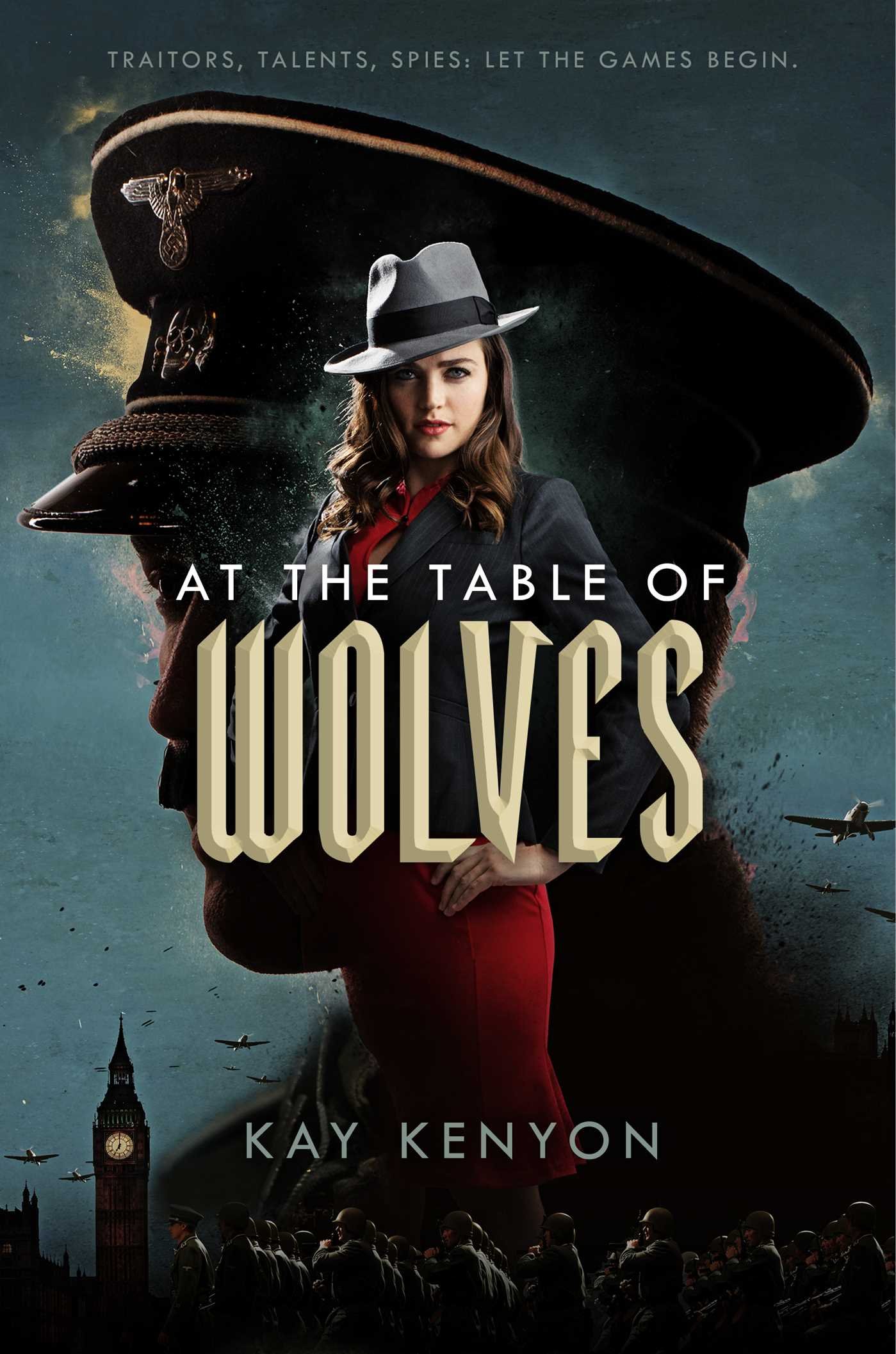
This book has a great story, but it's far less action-packed than what I expected. I think that was due to the cover. It's got an imposing, tense air. Those planes flying across bring up mental images of the bombing of London. The portrait of Kim is reminiscent of Hayley Atwell as Agent Carter. The promo copy on Simon and Schuster's website actually name checks Agent Carter along with Tinker Tailor Soldier Spy. I was expecting more behind-the-lines burglary and espionage flavored by superpowers.

Instead, the book has a high amount of social interaction, making the le CarrĂ© comparison more apt. Many of the important scenes are set in high society countryside weekends and fancy luncheons. The crux of information gathering in the story is gossip. Due to her Talent, Kim excels at this. Kenyon makes a fascinating choice, though, by making Kim uncomfortable with her ability.  She has no issues with her former role as an investigative reporter; but she wants people to like her for who she is. Kim doesn't want to betray people's trust, even unintentionally.

A major theme of the book is the dangers of a spy's life. By dint of the craft, one can't share information with those close. Kim isn't the only one who faces this issue. Her father, Julian, is a spy as well. Unlike Kim, Julian is working for H.R.M.'s government. The conflict between these two spies is at the crux of the story. They've been estranged for years. Now, both want to develop a closer relationship with each other. However, they each feel their secrets are too insurmountable. Kenyon is familiar with the theme of daughter/father conflict. It's a huge driver in her epic science fantasy series, The Entire and the Rose. It's not surprising to see her return to it in The Dark Talents.

One thing I particularly appreciated about At the Table of Wolves was the examination of modern events of the time. It's easy to look back at WWII and draw clear, black-and-white ideological lines. Kenyon captures the confusion of the time, though. A lot of people around the world thought that Hitler wasn't so bad. Even King Edward VIII (who reigned from January to December 1936) had pro-Nazi tendencies. After his abdication, Edward and his wife actually visited Hitler in Germany, and there were numerous rumors. Early in the book Kim mistakenly believes that her father is actually a supporter of Hitler, describing him as "something of a Nazi."

While the book is largely well done, there are a few flies in the ointment. The largest is the written use of accents in the story. The Tavistocks, being landed gentry, have servants. Their accents are thick and hard to read. It comes down to personal taste, but I have a hard time reading accents as they're written. It looks awful on the page. Also, it immediately hearkens back to the first time I saw it done -- the moles of Redwall. If it didn't make me think immediately of a children's book, I may be more lenient.

Overall, though, the story is breezily written, and is easy to follow. As mentioned before, the intrigue is a bit low-key compared to expectations, but it's very well paced and enjoyable.

Wednesday, October 31, 2018

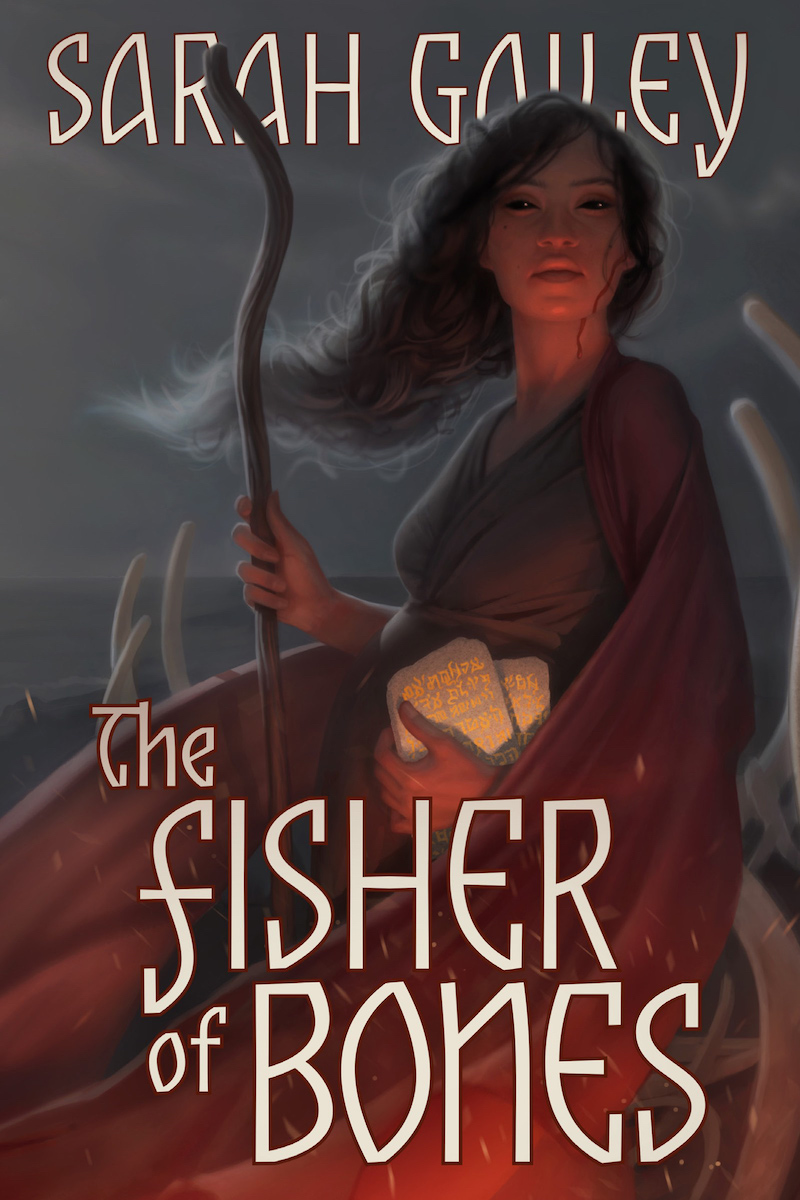
The Fisher of Bones by Sarah Gailey

NOTE: You can read Fisher of Bones for free on Fireside Magazine.

This is a story I can't stop thinking about it. Fisher of Bones tells the story of a small group of people who are looking for their Promised Land. 

The viewpoint character is their Prophetess, recently appointed by the previous Prophet (her father) right before he dies. She has to keep the fractious group united until they reach the Promised Land, and the job proves difficult.

I loved this story for several reasons. The first was the format. It's a novelette written as a series of short vignettes that are packed with character detail and emotional tension. They draw you through each chapter all the way to the ending. Because it's so short, the world building is dense. There are very few superfluous words.

A lot of other reviews I've seen has asked for more details. But I don't think more is necessary. After all, the Gods are not the driving force of the story. The act of living in the tension of community is the true focus. The Gods are, in a horrid sense, a Macguffin.

Faith in the Gods and their Promised Land drives and cements the community. The tribe wants to believe, but they have doubts. Since the Prophetess is the voice of the Gods, she receives the brunt of the angst her people are feeling. 


As is often in life, faith in this story leads to a place that's dark and scary and mysterious. If the Gods were revealed in more detail, the mystery would be destroyed.

Also, I loved that the Prophetess struggled so much with faith. Often, religious leaders have to put on a brave front for the rest of their group. Many of them have the most doubt, though. I thought this was a great aspect to the Prophetess, and loved seeing how it affected her relationships with her closest family and friends.

All-in-all, a remarkable piece of fiction that speaks a truth that is both real and memorable.

Sunday, October 21, 2018

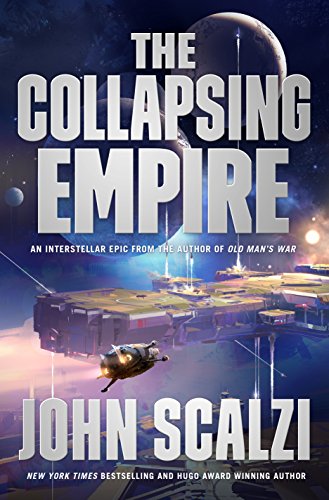
The Collapsing Empire by John Scalzi


The Collapsing Empire is the opening volume of Scalzi's latest space opera series. In this world, it is the far future. Humanity has spread to the stars in a vast empire which has existed for a millennium. There has been only one dynasty: that of the Wu family.

Faster than light travel isn't available in the most familiar sense. No hyperspace or warp speed. Instead, starships sail on a space/time current called the Flow. It doesn't take hours or even days to travel; rather, weeks or even months. There are specific points where ships can enter and exit the Flow, called shoals. 

At the beginning of the book, the Empire is in trouble. The Flow is beginning to change. It's no longer becoming accessible to humanity. Some people believe that it's reversing course. Others think something more dire is occurring.
 
According to an interview with NPR, some wondered if the title was a thinly veiled reference to the perceived fragility of the United States. Scalzi pointed out that he was reaching further back. 
In fact I did think very generally about the "golden age" of European exploration, roughly corresponding to the 15th through 17th centuries, in the sense that the empires that rose out of that era were wholly dependent on natural forces (wind, ocean currents, rivers) to move their ships and shape their destinies with regard to trade and exploration. We're so used to having at least some mechanical control of our travel that it's hard to put oneself back into a mindset where travel took months, not hours, and was not always a safe and predictable thing.  
So there was no one particular empire in our past I was borrowing from, but rather, a whole historical gestalt, and then only loosely. Please, historians, don't tell me all the things I'm getting wrong about the European age of exploration! I know. I KNOW.
I loved this approach! I've always found this time frame to be rather fascinating. And the tropes of the Age of Discovery were rather apt for a space opera. For example, trade monopolies. From a historic perspective, the East India Trade Company exerted tremendous power in Great Britain. 5% of all imports came from India, and passed through the Company's control at some point. 

Something similar occurs in this story.  The imperial Wu family is the dominant powerhouse. But they've allowed other nobility members to have their own franchise monopolies. For example, the Lagos family has control of all citrus fruits in the Interdependency.  

Scalzi's trademark snark seasons the story. He's never going to be one of my favorite stylistic writers. In general, I've always found his descriptions generic at best. But his biting sense of humor is a solid compensation. It makes the story easy to read, and I found myself moving through it at a quick clip. 

One area that the humor shines through is in the name of the ships. Scalzi has acknowledged that Iain M. Banks's Culture series were an inspiration. And sometimes a well-crafted homage fits into the tone of a book. Every time I heard about the Yes, Sir, That's My Baby and No, Sir, I don't Mean Maybe it made me smile. 

A word of warning to those who dislike profanity in their stories: this book is heavily layered with them. One character, Kiva Lagos, works in profanity like a proficienct master orator bent towards the obscene. While I found her funny, I can understand why others would easily tire of Kiva's... creative license.

All in all, I'd recommend The Collapsing Empire. It's funny, its easy to read, and it's creative by looking backwards to extrapolate forward. The second book in the series, The Consuming Fire, was a recent release. So expect my thoughts on that soon.