In 1936, Germany's invasive streak is starting to become more noticeable. Weeks earlier, Rhineland was taken. While most of Europe is questioning what to do, England hasn't officially taken a position. But, of course, their espionage teams have begun monitoring for a Jerry invasion.
Since the end of World War I, a new resource is available: Talents. It's not entirely clear why, but supernatural abilities have begun to bloom, sometimes in the most unexpected people.
Kim Tavistock is one of those people. A British/American dual citizen, she has returned to her father's homeland. Her career as an investigative reporter in America has collapsed, and she's looking for a way to put her skills to use. Her Talent is spill; people share private, personal information with her. Just the perfect ability for a spy to have.
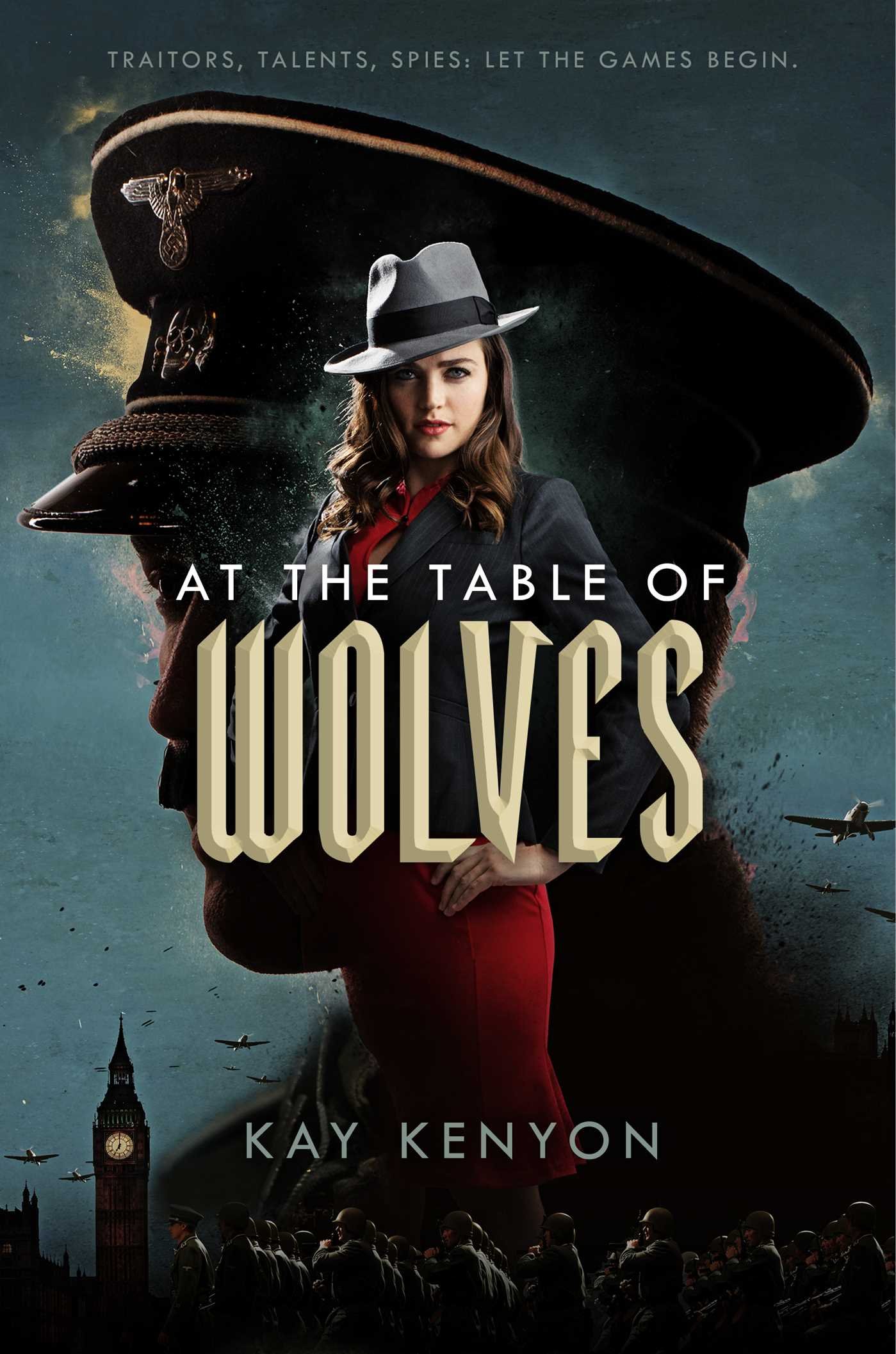
This book has a great story, but it's far less action-packed than what I expected. I think that was due to the cover. It's got an imposing, tense air. Those planes flying across bring up mental images of the bombing of London. The portrait of Kim is reminiscent of Hayley Atwell as Agent Carter. The promo copy on Simon and Schuster's website actually name checks Agent Carter along with Tinker Tailor Soldier Spy. I was expecting more behind-the-lines burglary and espionage flavored by superpowers.
Instead, the book has a high amount of social interaction, making the le Carré comparison more apt. Many of the important scenes are set in high society countryside weekends and fancy luncheons. The crux of information gathering in the story is gossip. Due to her Talent, Kim excels at this. Kenyon makes a fascinating choice, though, by making Kim uncomfortable with her ability. She has no issues with her former role as an investigative reporter; but she wants people to like her for who she is. Kim doesn't want to betray people's trust, even unintentionally.
A major theme of the book is the dangers of a spy's life. By dint of the craft, one can't share information with those close. Kim isn't the only one who faces this issue. Her father, Julian, is a spy as well. Unlike Kim, Julian is working for H.R.M.'s government. The conflict between these two spies is at the crux of the story. They've been estranged for years. Now, both want to develop a closer relationship with each other. However, they each feel their secrets are too insurmountable. Kenyon is familiar with the theme of daughter/father conflict. It's a huge driver in her epic science fantasy series, The Entire and the Rose. It's not surprising to see her return to it in The Dark Talents.
One thing I particularly appreciated about At the Table of Wolves was the examination of modern events of the time. It's easy to look back at WWII and draw clear, black-and-white ideological lines. Kenyon captures the confusion of the time, though. A lot of people around the world thought that Hitler wasn't so bad. Even King Edward VIII (who reigned from January to December 1936) had pro-Nazi tendencies. After his abdication, Edward and his wife actually visited Hitler in Germany, and there were numerous rumors. Early in the book Kim mistakenly believes that her father is actually a supporter of Hitler, describing him as "something of a Nazi."
While the book is largely well done, there are a few flies in the ointment. The largest is the written use of accents in the story. The Tavistocks, being landed gentry, have servants. Their accents are thick and hard to read. It comes down to personal taste, but I have a hard time reading accents as they're written. It looks awful on the page. Also, it immediately hearkens back to the first time I saw it done -- the moles of Redwall. If it didn't make me think immediately of a children's book, I may be more lenient.
Overall, though, the story is breezily written, and is easy to follow. As mentioned before, the intrigue is a bit low-key compared to expectations, but it's very well paced and enjoyable.

